
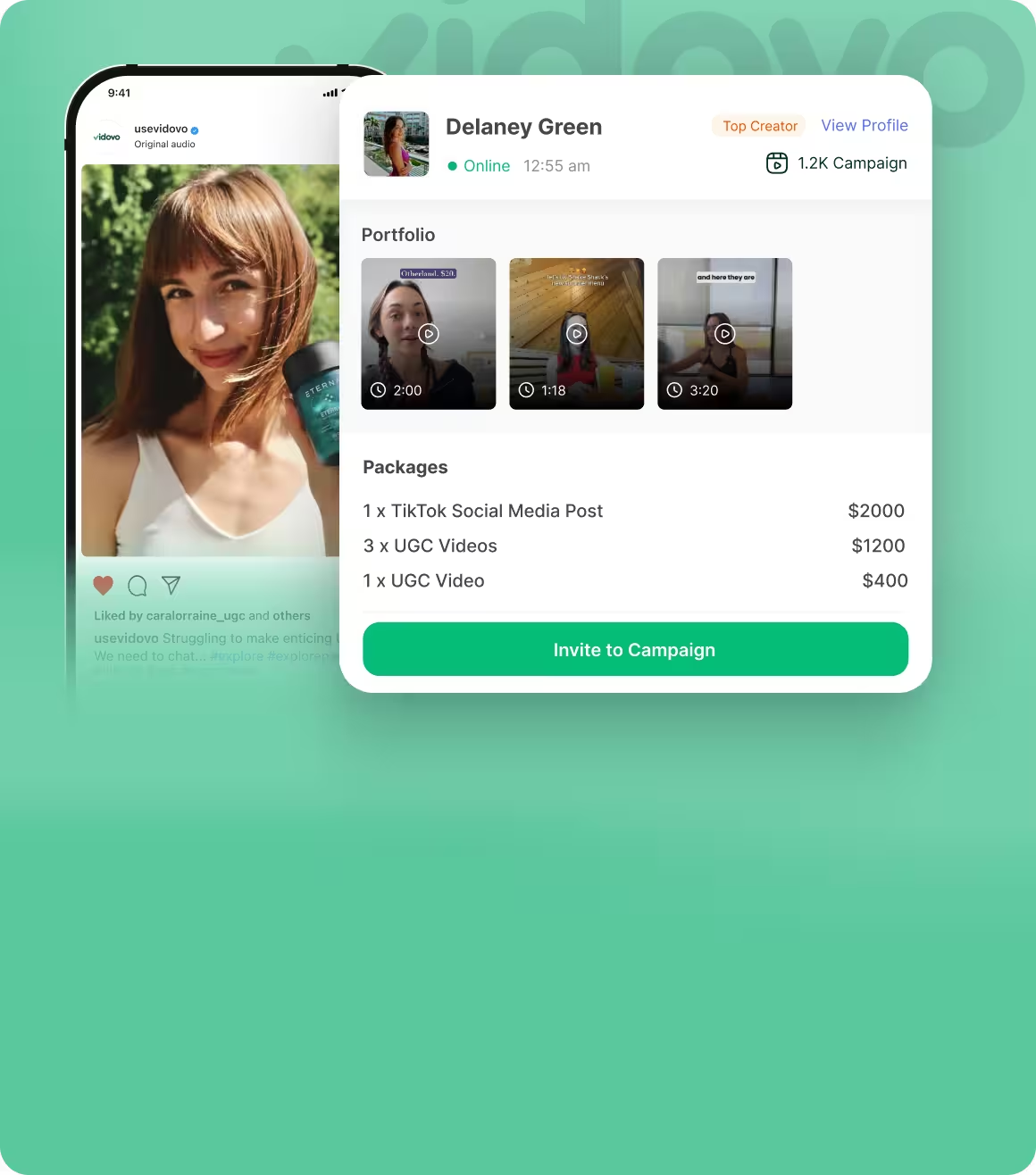


Creator marketplace campaigns usually do not stall because brands cannot find creators. They stall because the process around the creators becomes hard to manage. Once a brand moves from one or two creators to 10, 20, or 50, the problems show up fast: unclear briefs, slow approvals, scattered feedback, missing usage rights, and ROI tracking that does not connect content to performance.
For B2C and DTC marketing leaders, this is where creator marketplaces can feel frustrating. The promise is simple: more creators, more content, faster testing. The reality is often more complicated. Without the right system, influencer marketing scaling can create more work for the marketing team instead of less.
Answer First: Why Creator Marketplace Campaigns Stall
Creator marketplace campaigns stall when brands treat creator sourcing as the whole strategy. Finding creators is only one part of the process. The harder part is managing the campaign from brief to delivery to performance review.
The best creator programs have structure around each step. A strong UGC creative brief gives creators enough direction without turning the video into a scripted ad. A clear approval process helps brands review content faster without slowing creators down. A stronger tracking system connects creator output to marketing campaign optimization, not just content volume.
That is the difference between running a creator marketplace campaign and building a repeatable creator engine.
The Briefing Problem
Most brand collaboration challenges start before the creator ever films. The brief is either too vague or too controlling.
A vague brief leaves creators guessing. They may understand the product, but not the offer, angle, customer pain point, usage rights, or platform goal. That often leads to content that looks fine but does not fit the campaign.
A controlling brief creates the opposite problem. The brand gives the creator too many lines, too many talking points, and too little room to sound natural. The final video may be technically correct, but it feels like a brand ad wearing creator clothing.
Creator marketplace campaigns work better when the brief focuses on the outcome. That means giving creators the product details, audience, hook direction, must-say points, avoid list, usage rules, and examples of what has worked before. It also means leaving space for the creator to make the content feel native to their voice.
The Approval Problem
Approvals are where many creator campaigns slow down. A creator submits content, a brand manager reviews it, someone from paid media adds notes, legal has a concern, and the feedback gets split between email, Slack, comments, and spreadsheets.
By the time the creator gets a revision request, the feedback may be unclear or conflicting. This creates delays, extra edits, and frustration on both sides.
For brands trying to scale creator economy management, approvals need one place to live. Teams need to see what was submitted, who reviewed it, what changed, what is approved, and what is ready for paid or organic use.
This matters even more for DTC brands that rely on constant creative testing. A slow approval process can turn a strong content pipeline into a bottleneck. The team may have plenty of creator relationships, but not enough usable assets making it into the market.

The Usage Rights Problem
Usage rights are easy to overlook when a campaign is small. At scale, they become one of the biggest risks.
A video approved for organic social may not automatically be cleared for paid ads, website use, email, retail pages, or whitelisting. If the team does not track those permissions, content can sit unused or get used in a way that creates problems later.
Strong creator marketplace campaigns need usage rights built into the workflow from the start. Brands should know which assets can be used, where they can be used, how long they can be used, and whether editing or paid media is included. Vidovo’s usage rights policy is a helpful example of why these details need to be clear before content gets repurposed.
Without that structure, brands may end up paying for content they cannot fully use.
The ROI Tracking Problem
Influencer ROI is often tracked too late. Many brands review creator campaigns after the content has already been delivered, approved, and posted. By then, it can be hard to know which creator, hook, format, or angle actually helped performance.
For creator marketplace campaigns to improve over time, tracking has to connect creative inputs to campaign results. That includes the creator, product angle, hook, format, length, call to action, platform, usage type, spend, click-through rate, hold rate, conversions, and ROAS.
This is where UGC performance tracking becomes more useful than basic engagement. Likes and views can help measure attention, but they do not tell the full story. A creator video that drives stronger hold rate, lower CPA, or better ROAS is more valuable than one that simply looks polished.
How A Better System Fixes The Bottleneck
The solution is not just “more creators.” It is a cleaner process for managing creators.
A stronger approach connects creator discovery, briefing, approvals, content organization, usage rights, and performance tracking in one workflow. That gives marketing teams a better way to manage campaigns without losing control as volume increases.
A platform like Vidovo for brands helps brands move beyond one-off creator sourcing and build a more repeatable content system. Brands can find UGC creators, manage campaign steps, review content, and keep creator output tied to the bigger marketing goal.
That matters for B2C and DTC teams because creative fatigue is constant. Paid social needs new angles, new faces, new hooks, and new formats. A creator marketplace can help supply that content, but only if the process behind it is organized enough to support scale.
Final Thoughts
Creator marketplace campaigns stall when brands focus too much on access and not enough on execution. Finding creators is important, but it does not solve the operational work that comes after.
The brands that get more value from creator marketplaces usually have a better system behind the campaign. Briefs are clearer. Approvals move faster. Usage rights are tracked. ROI is reviewed by creative angle, not just by creator name.
That is what turns creator marketplace campaigns from a content sourcing tactic into a stronger growth channel.
FAQ
Why do creator marketplace campaigns stall?
They usually stall because the workflow is not built for scale. Briefing, approvals, usage rights, and ROI tracking all become harder as more creators are added.
What is the biggest challenge with influencer marketing scaling?
The biggest challenge is keeping quality, speed, and tracking consistent while working with more creators at once.
How can brands improve creator campaign approvals?
Brands can improve approvals by keeping submissions, feedback, revision notes, and final approvals in one place instead of spreading them across email and chat.
Why does influencer ROI tracking matter for UGC?
ROI tracking helps brands understand which creators, hooks, formats, and product angles are actually driving performance, not just engagement.
How does Vidovo help with creator marketplace campaigns?
Vidovo helps brands connect with creators and manage the campaign process more smoothly, from creator sourcing to content delivery and performance-focused creative testing.
